
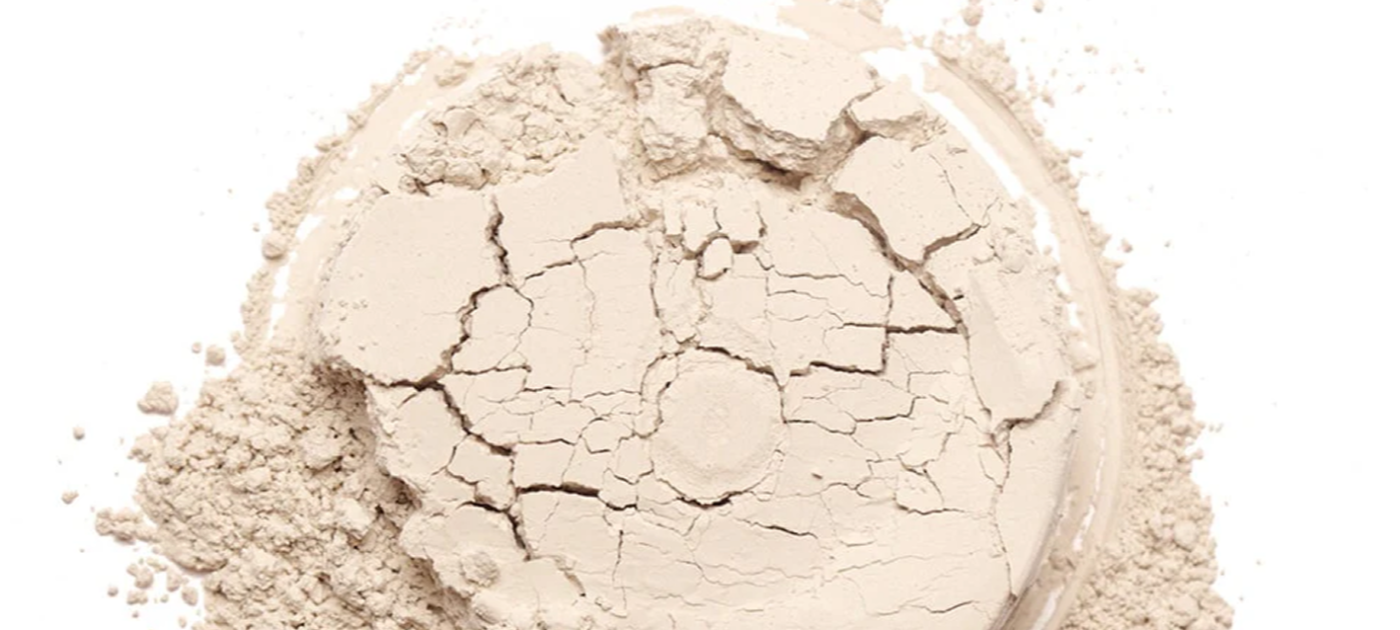
Bentonite
Bentonite (/ˈbɛntənaɪt/ BEN-tə-nyte)[1][2] is an absorbent swelling clay consisting mostly of montmorillonite (a type of smectite) which can either be Na-montmorillonite or Ca-montmorillonite. Na-montmorillonite has a considerably greater swelling capacity than Ca-montmorillonite.
Bentonite usually forms from the weathering of volcanic ash in seawater, or by hydrothermal circulation through the porosity of volcanic ash beds, which converts (devitrification) the volcanic glass (obsidian, a volcanic glass with a chemical composition equivalent to rhyolite) present in the ash into clay minerals. In the mineral alteration process, a large fraction (up to 40–50 wt.%) of amorphous silica is dissolved and leached away, leaving the bentonite deposit in place.[citation needed] Bentonite beds are white or pale blue or green (traces of reduced Fe2+
) in fresh exposures, turning to a cream color and then yellow, red, or brown (traces of oxidized Fe3+
) as the exposure is weathered further.[5]
As a swelling clay, bentonite has the ability to absorb large quantities of water, which increases its volume by up to a factor of eight.[5] This makes bentonite beds unsuitable for building and road construction. However, the swelling property is used to advantage in drilling mud and groundwater sealants. The montmorillonite / smectite making up bentonite is an aluminium phyllosilicate mineral, which takes the form of microscopic platy grains. These give the clay a very large total surface area, making bentonite a valuable adsorbent. The plates also adhere to each other when wet, giving the clay a cohesiveness that makes it useful as a binder and as an additive to improve the plasticity of kaolinite clay used for pottery.[6]